Episode Description
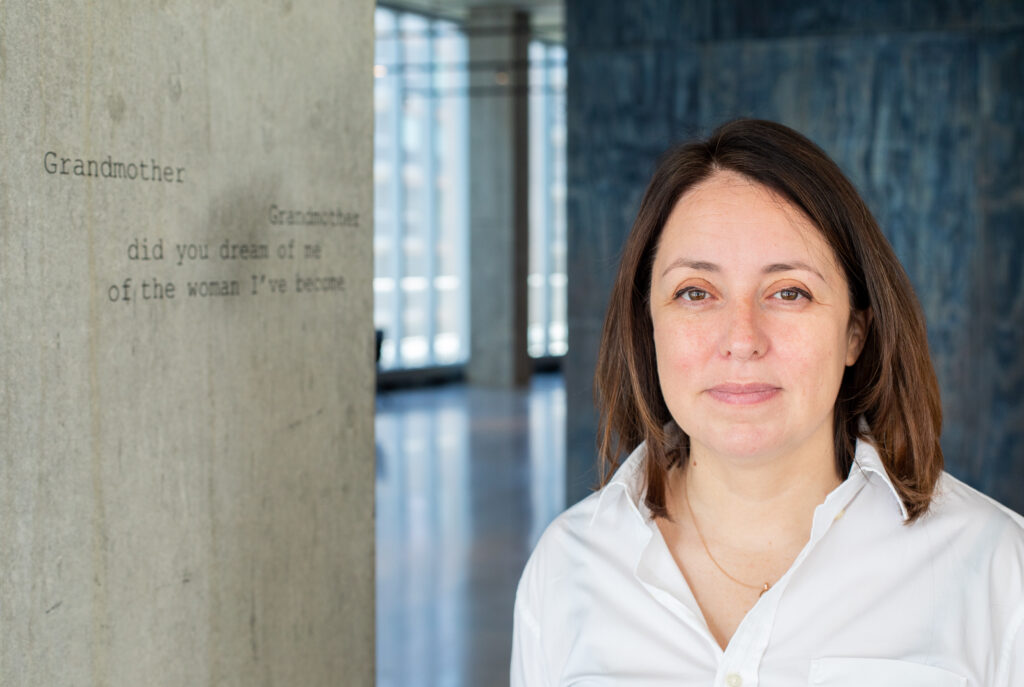
Julie Eizenberg is a founding partner at Koning Eizenberg Architecture, the award winning Santa Monica based practice recognized for its creative and socially engaged design work. Together with her partner, Hank Koning, Julie has built a career defined by curiosity, community connection, and a willingness to take creative risks that challenge conventional boundaries. Over the years, the duo’s work has earned some of the profession’s highest honors including the AIA Los Angeles Gold Medal in 2012, the Australian Institute of Architects Gold Medal in 2019, and the American Academy of Arts and Letters Architecture Award in 2021. In 2020, Julie was named a Design Leader in Architectural Record’s Women in Architecture Awards, a testament to her influence as both a designer and a teacher.
Julie’s story begins in Australia, where she grew up in a traditional Jewish family amongst a community of different immigrant groups. Reconciling those competing values was not always easy throughout school. When the global recession made job opportunities scarce, Julie and Hank decided to take a leap of faith, moving abroad to study, explore, and redefine what architecture could mean for them.
After finishing graduate school in the United States, they built their practice from the ground up. Unable to get work permits, they took on projects for themselves, finding early clients through family connections and grassroots networks. “We were 25, 26, why not? You just do it,” she recalls. “We had no business plan. We had no idea if this was a long term thing or short term thing. Just jump in, see what happens.” Their living room and garage served as their first offices. Volunteering led them to collaborate with community groups revitalizing neighborhoods, improving streetscapes, and developing affordable housing. Those early experiences deeply shaped Julie’s understanding of what architecture can do when it responds closely to people and places.
“We also had a false idea of what we could accomplish. Like why can’t we? Sometimes not knowing is as good as knowing.”
Creating meaningful work has always been central to Julie’s philosophy, but she is quick to note that thinking harder does not always mean designing better. She encourages a balance between confidence and humility, a willingness to not always know the answers. “Sometimes not knowing is as good as knowing,” she says, reflecting on her early days of experimentation and risk taking.
“People are people and there’s no moral high ground because you work with one group more than another. You just have to be respectful of people no matter who they are.”
Her approach to design and community work is grounded in respect, empathy, and a deep belief in shared humanity. “People are people and there is no moral high ground because you work with one group more than another. You just have to be respectful of people no matter who they are.” This perspective threads through her projects, her teaching, and her leadership, reminding us that architecture’s value lies not only in form, but in the connections it fosters among people.
Throughout the conversation, Julie speaks candidly about the uncertainties that define a designer’s path, the nervousness that comes with change, the limitations of overthinking, and the power of simply moving forward. Her advice to the next generation is both grounded and joyful: “Don’t lose sight of the joy of being able to investigate a problem.”
The Podcast
Every month, we interview a designer, discussing how their identity, role models, and other design ideas shape who they are as people.